
CASE STUDY
Schweigen
Giving every customer access to product expertise
Schweigen partnered with Norby to explore a new way for customers to get expert product guidance in busy retail and event environments.
As a premium Australian ventilation brand, Schweigen sells products that often require more explanation than a conventional product display can provide. Customers need to understand differences between models, installation requirements, motor configurations, noise, ventilation performance and which solution is appropriate for their kitchen.
Norby was deployed as a voice-first AI product expert, trained on Schweigen's product range and designed to answer those questions through a natural conversation.
THE CHALLENGE
Complex products need knowledgeable conversations
Buying a rangehood isn't always straightforward.
Customers frequently have detailed questions about sizing, installation, motor placement, ducting, noise and product suitability. In a busy showroom or event environment, the right salesperson isn't necessarily available at the exact moment those questions arise.
Static displays can provide specifications, but they can't understand what a customer is trying to achieve, ask follow-up questions or explain the differences in context.
Schweigen wanted to explore whether every customer could have immediate access to that level of product knowledge, without requiring a salesperson to begin every interaction.
THE DEPLOYMENT
A product expert customers can simply talk to
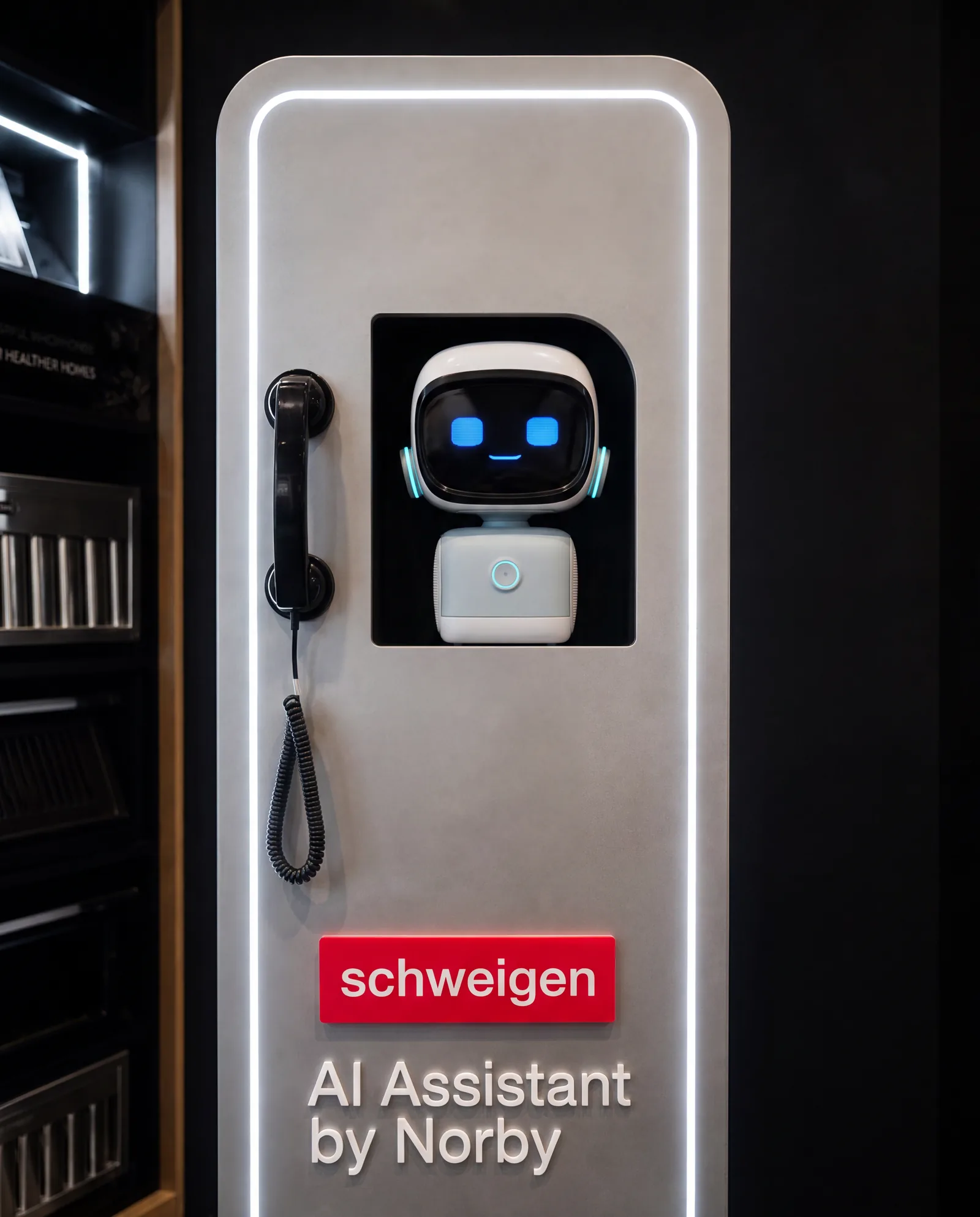
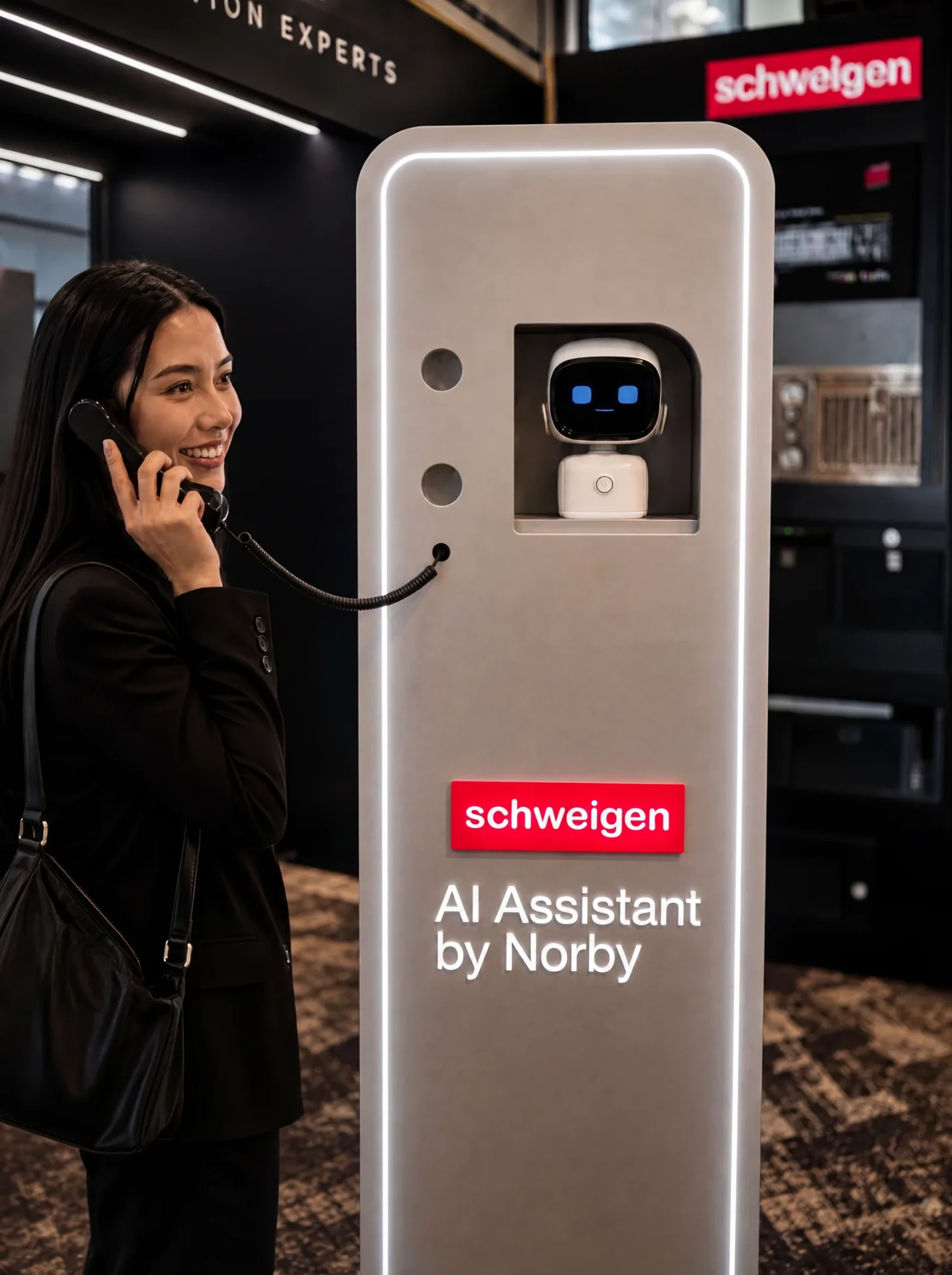
Norby was trained on Schweigen's products, terminology and common customer questions, then deployed through a purpose-built Schweigen-branded kiosk.
Customers could pick up the handset and speak naturally to Norby, asking the same kinds of questions they would normally ask a knowledgeable member of the sales team.
Norby could help customers:
- Understand differences between products
- Explore which products suited their kitchen and requirements
- Ask detailed installation and technical questions
- Understand motor and ventilation options
- Work through common concerns and objections
- Identify appropriate next steps
There were no menus to navigate or search terms to learn. Customers could simply explain what they wanted to know.
FROM AI CONVERSATION TO HUMAN CONVERSATION
Norby handles discovery. The sales team takes it from there.
The goal wasn't to replace the salesperson.
Norby was designed to handle the initial browsing and discovery phase, particularly when team members were already occupied.
Once a customer had established what they needed, the conversation could move to a member of the Schweigen team with considerably more context.
INSTEAD OF:
“I'm interested in a rangehood.”
THE HANDOFF COULD BECOME:
“I'm renovating a 900 mm kitchen, I'm concerned about noise, and I'd like to understand which externally mounted motor option would suit the installation.”
That creates a much more useful starting point for both the customer and the salesperson.
Tested in a real customer environment
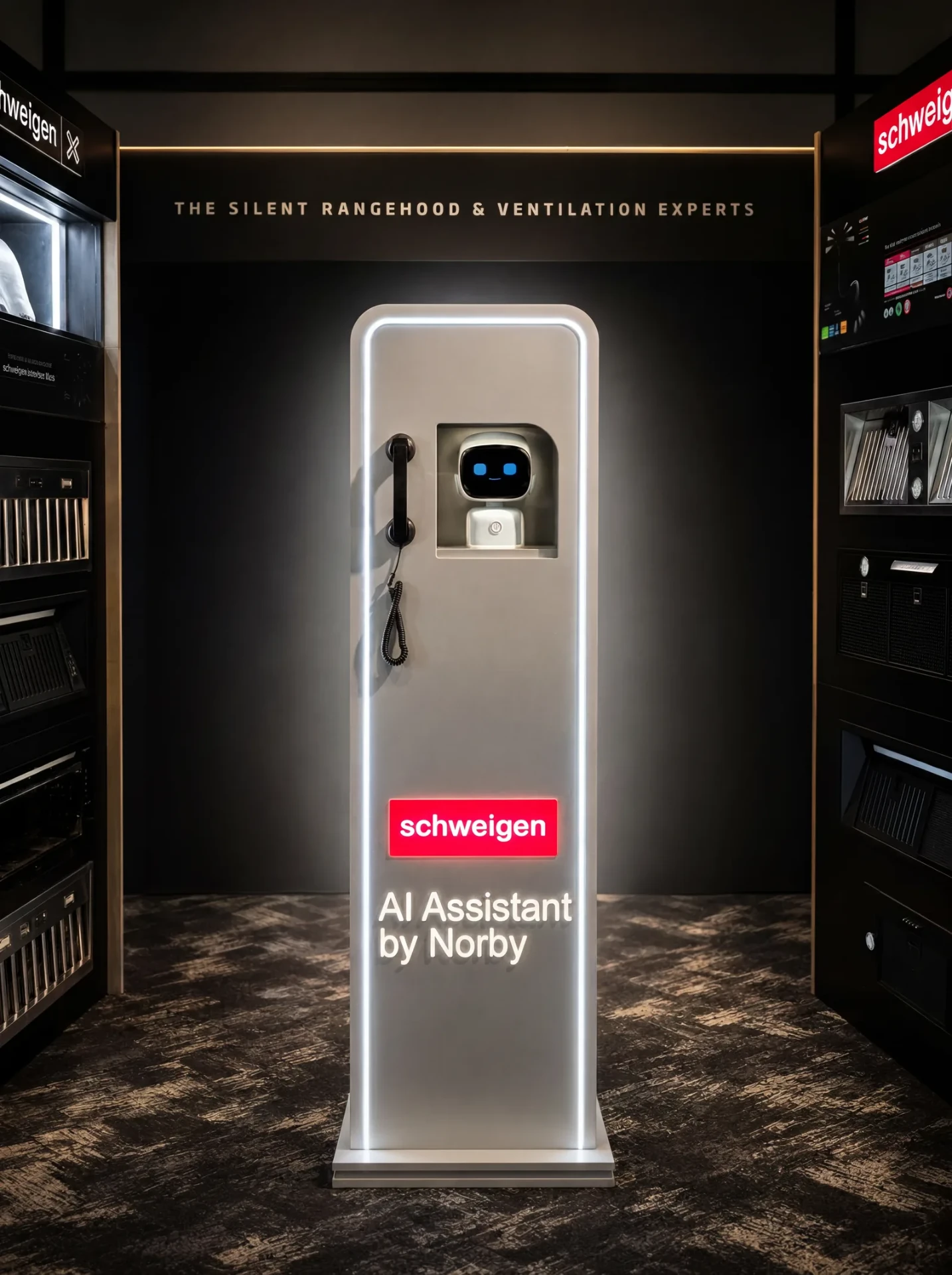
Norby was used by Schweigen at the Harvey Norman Cooking Expo at Rosehill Gardens, where customers were able to walk up and interact with the system directly.
The deployment provided an opportunity to test Norby in the kind of environment it was designed for: real customers, real product questions and salespeople simultaneously managing multiple conversations.
The early deployment focused on the quality of those interactions rather than simply counting kiosk usage:
- Could customers have useful, multi-turn conversations?
- Could Norby answer the kinds of questions normally directed to sales staff?
- Could it help qualify what a customer actually needed?
- Could it support customers while staff were occupied?
- Could it create a better handoff when a salesperson became involved?
The deployment also gave the team insight into the questions, concerns and areas of product knowledge that matter most to customers.
More than a digital information screen
A conventional kiosk waits for customers to navigate through predetermined information.
Norby starts with a different interface: conversation.
A customer can ask one question, clarify the answer, add context, change direction and continue until they understand what they need.
That makes the interaction closer to speaking with a knowledgeable product specialist than using a traditional touchscreen display.
For considered purchases such as kitchen appliances, that difference matters.
Extending product expertise across the customer journey
The physical kiosk represents one part of the broader work between Schweigen and Norby.
The same underlying product knowledge can be used across customer touchpoints, creating the potential for customers to receive consistent guidance whether they are researching online or speaking with Norby in a physical environment.
The long-term idea is simple:
Give every customer access to knowledgeable, conversational assistance wherever they encounter the brand.
THE PRINCIPLE BEHIND THE DEPLOYMENT
Make your best salesperson available to every customer.
Norby gives brands like Schweigen another layer of customer-facing capacity.
It can handle repetitive questions, help customers understand complex products and identify what they actually need, while allowing salespeople to concentrate on the conversations where human involvement creates the most value.